 In-Stock Music Orders Over $99 SHIP FREE Within The Continental U.S.





 Login
Login
 My Account
 Cart
Cart Wishlist
 Contact





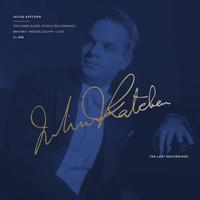
Julius Katchen - The Unreleased Studio Recordings
(Numbered Limited Edition)
|
|


| Label: |
The Lost Recordings |
| Genre: |
Classical |
| Product No.: |
ATLRE 2603066
|
| Availability: |
Pre Order
|
| Category: |
45 RPM Vinyl Record |
| No. of Discs: | 2 |
| Note: | 180 gram |
| Coming April 30, 2026 | |

Julius Katchen — The Unreleased Studio Recordings
180-gram mono 2LP 45 RPM limited to 3,000 hand-numbered copies!
Meticulously restored from original analog tapes
Lacquers cut by Kevin Gray at Cohearent Audio
Pressed by Phoenix Pressings
Tip-on gatefold jacket printed in Italy
Julius Katchen's reputation for his interpretation of the work of Johannes Brahms is universally acknowledged. On December 13, 1965, in the German radio station's renowned Studio 3, Katchen sat down at the piano to play a version of ten of Brahms' Hungarian Dances for Solo Piano, until today never published.
Of course, his repertoire extends beyond the works of Brahms. As this edition of concerts for Berlin Radio attests, he approaches both Mendelssohn and Liszt with equal power.
Brahms's Hungarian Dances comprise a series of 21 compositions and arrangements, written between 1867 and 1880 and inspired by popular Roma and Slav folk tunes. The first series of 10 dances for piano solo displays the fervor of the composer in his youth; Katchen clearly perceives their great vivacity. Katchen is no mere performer of Brahms among many. He truly lives the music, as if he were the composer's close friend, his confidant. The dances take the form of a bucolic painting that Brahms and Katchen paint together — a painting filled with joy, despair, unruliness, fear and tenderness.
The first of Felix Mendelssohn's Six Preludes and Fugues, Opus 35, reveals a different vision of German romanticism. With greater austerity, heightened spirituality, it is inspired by the baroque form of chorale and fugue to which Johann Sebastian Bach brought such dignity. Mendelssohn had rediscovered Bach's music, fallen into oblivion.
Mendelssohn completed the Rondo Capriccioso in 1830 after reworking it several times over the course of two years to finally offer it to pianist Delphine von Schauroth, whom he had been courting perseveringly, but ultimately, unsuccessfully. Perhaps this is why the andante conveys overtones of despair that contrast with the inordinate gaiety of the Presto.
With the works of Franz Liszt, who all his life had soaked up the sounds and melodies of his native Hungary, we return to folklore. Katchen gives a majestic rendition of the Twelfth Rhapsody with a delectable version, playing on a musical palette that includes, in turn, melancholy, pianistic virtuosity, grave themes and wild dances.
In barely more than 20 years of a musical career, Julius Katchen proved that he had unique artistic talents. But the life of this prodigy was cut short too early. This edition attests to his dazzling trajectory at the piano as an interpreter of the romantic tradition.
| LP 1 | Brahms: Ten Hungarian Dances for piano solo | 1. No. 1 in G Minor - Allegro molto | 2. No. 2 in D Minor - Allegro non assai | 3. No. 3 in F Major - Allegretto | 4. No. 4 in F-Sharp Minor - Pocco sostenuto | 5. No. 5 in F-Sharp Minor - Allegro | 6. No. 6 in D-Flat Major - Vivace | 7. No. 7 in F Major - Allegretto | 8. No. 8 in A Minor - Presto | 9. No. 9 in E Minor - Allegro non troppo | 10. No. 10 in E Major - Presto | LP 2 |
Mendelssohn: Prelude and Fugue in E Minor, Op. 35, No. 1 | 1. Prelude | 2. Fugue | 3. Mendelssohn: Rondo capriccioso, Op. 14 | 4. Liszt: Hungarian Rhapsody No. 12 in C-Sharp Minor, S. 244 |

|
View other items by Julius Katchen |
|
 Send to a Friend
 Print this Page