Acoustic Sounds Newsletter
|
|
Myra Taylor 1917-2011
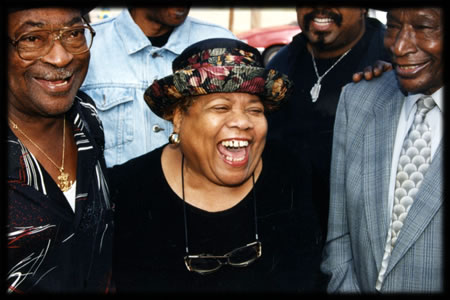 If New Orleans was the birthplace of jazz, Kansas City was where it spent its formative years. And singer Myra Taylor was there to grow up with it. Having outlived every other contributor to that seminal heyday scene, Myra's death Friday, December 9, 2011, officially closes the book on one of the most important chapters in American music history. Myra Taylor was 94.
To detail the yield of Myra's 80 years in show business would be to drop enough historic names to fill a museum. Count Basie, Roy Eldridge, Lonnie Johnson, Earl "Fatha" Hines, Bennie Moten, Lester Young, Jimmy Rushing, Wynonie Harris, Albert Ammons, Fletcher Henderson...should we keep going? OK. Big Joe Turner, Pete Johnson, Lil Hardin Armstrong, Baby Dodds, Tadd Dameron, Buster Smith, Eubie Blake, Harlan Leonard, Jay McShann, Sarah Vaughan, Johnny Otis, Stuff Smith - Myra sang with them all.
She got an early start. At age 14, Myra began as a dancer in a club in the now historic 18th and Vine district of Kansas City. Too young to use the front door, Myra actually climbed in and out of a window to make her regular gig. Within a year or two she gained notice for her singing, and by 1932 was in demand enough to work two clubs, doing three shows per night at each for three years.
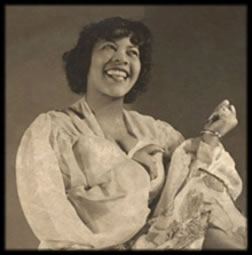
From 1937 to 1940, Myra lived in Chicago where she worked with Roy Eldridge, Lonnie Johnson, Lil Hardin Armstrong, Earl "Fatha" Hines and Stuff Smith among others.
Back in Kansas City in 1940, Harlan Leonard hired Myra as his featured singer for the newly formed Harlan Leonard and His Rockets. The band toured coast-to-coast for some five years and had a lengthy engagement at Harlem's Golden Gate Ballroom. Her bandmates in the Rockets included Tadd Dameron, Eddie Durham, Buster Smith and Ernie Williams. Myra made her recording debut in 1940 with Leonard for RCA/Bluebird when she cut the first version of "I Don't Want To Set The World On Fire."
After she left Leonard's group, Myra joined with Eubie Blake and did a World War II USO tour in 1944 and 1945 through the USA bases up and down both coasts and across the southern states. Years later, Myra would do USO tours on the front lines of the Korean and Vietnam wars.
In 1946, Myra recorded in Kansas City for Mercury Records. Her first record, "The Spider And The Fly" sold so well that she recorded 12 more sides for Mercury, 10 of which were released. Other resulting hits included "Take It Easy Greasy" and "Still Blue Water."
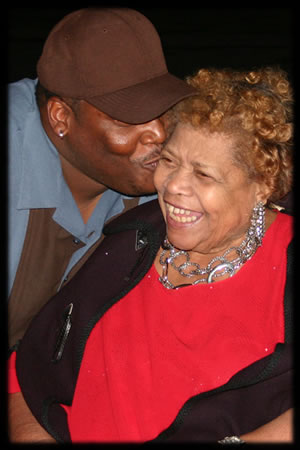
From 1949 to 1959, Myra worked nightly at the Chinese Palace in Juarez, Mexico, becoming a huge star back when that border town was something of a live entertainment destination.
Myra began to tour Europe regularly in the mid-1960s and moved to Frankfurt, Germany, in 1972. There she owned and operated a club called Down By The Riverside for five years. Muddy Waters and Jimmy Smith were customers while in town.
All told, from 1949 to 1977, Myra performed in more than 30 countries.
She moved to California in 1977, where she continued her singing career but also began work as an actress. Myra was the lead character in a 1979 comedy about women's professional basketball called Scoring. She also worked in several horror pictures, and in the early 1980s appeared in three episodes of the hit television sitcom The Jeffersons.
Myra returned to Kansas City in 1994 and resumed her music career in 1999, thanks in large part to her manager and friend Dawayne Gilley, who worked to generate publicity and gigs. In 2001, she recorded her final record, My Night To Dream, for APO Records at Blue Heaven Studios in Salina, Kansas. The record and her subsequent bookings earned her the "Best Female Artist" and "Comeback Artist" awards for 2002 in Living Blues Magazine.
In the last 15 years, Myra worked somewhat regularly as the leader of a women singer-led jazz group called The Wild Women of Kansas City.
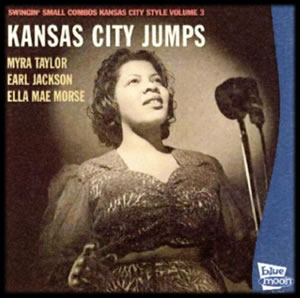
Myra was a very special woman who had several gifts that she shared generously. She was a brilliant comedian, gifted with fabulous timing, and she regularly won belly laughs from her crowds between songs. And while her performances were very classy, to her closest friends, Myra was known to be positively hilarious with her "blue" humor.
She was exceptionally supportive of younger musicians. Myra sat in the front row of every Blues Masters at the Crossroads concert at Blue Heaven Studios until this past October, when, finally, her health wouldn't allow it. Every year, she'd sit for more than five hours each night and just beam her support to the artists that were "giving it" on stage. Then she'd show up at the after-hours jam session, sing a few numbers herself, encourage the musicians she'd befriended, exchange a few phone numbers and finally call it a night usually just before the sun came up. All this she did into her 90s. In fact, in its 14 years, nobody has seemed to enjoy the Blues Masters concerts more than Myra. And there are a whole lot of people who considered Myra a big part of the reason they enjoyed the concert weekend.
She was a fascinating storyteller, imparting incredible detail. And considering how little many people today know about the heyday of Kansas City jazz relative to the enormous impact it's had on music at large, Myra's memories and stories were a wonderful gift to her native city and to the fans who cared to listen.
Marc Sheforgen, APO Records
|
Hubert Sumlin 1931-2011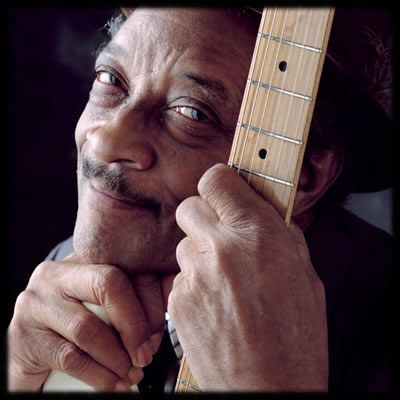
Truly one of the sweetest men in the blues so happened to be perhaps its most influential guitarist of all time. Hubert Sumlin, who died Sunday, October 4, 2011 at age 80, was the kind of guy who either remembered you or acted so convincingly like he remembered you, not to be fake, but because he really cared about making you feel special. And any serious fan of blues guitar will remember him - easily.
His most indelible mark on history came through his 20-plus years as the guitarist for the almighty Howlin' Wolf. Trademark Wolf recordings from the early-to-mid '60s like "Goin' Down Slow," "Killing Floor," "Wang Dang Doodle," "Built For Comfort," "Shake For Me," "300 Pounds Of Joy" and "Louise" cemented Hubert's status as a guitar great. Recently, Rolling Stone ranked him number 43 on its list of Top 100 guitarists.
So funky and dynamic and primitive and even kooky was Hubert's playing that he became a hero to many of the most famous guitarists who bridged the gap between blues and rock. Stars like Eric Clapton, Keith Richards and Jimmy Page cited him as among their favorite guitarists when American blues was serving as a wellspring of inspiration for British rockers. Jimi Hendrix was among that same scene of admirers. And later Stevie Ray Vaughan would again laud Hubert's greatness. Unquestionably, the endorsements of those big-time artists helped to float Hubert's career, putting him on some of the biggest stages in the world over the years as guest to many of the aforementioned celebrities.
Hubert was born in 1931 in Greenwood, Mississippi, and raised in Hughes, Arkansas. Like many of the would-be blues artists of the time and area, his first "guitar" was a bailing wire nailed to a wall. Eventually his mother spent a week's pay to buy him his first real instrument. He was 10 when he first saw the Wolf perform. He'd climbed atop a stack of soda crates to peer through a juke joint window, and then actually crashed through the window and landed on the stage. Wolf himself took Hubert home to his mother and asked her personally not to punish the young boy. A few years later, Wolf brought Hubert to Chicago for the beginning of one of the greatest runs in blues history.
Wolf initially chastised Hubert for playing too loud and aggressive. He sent the young guitarist home, told him to ditch his guitar picks and to not come back until he had it "right." So began the inimitable, finger picked style that history will remember. The magic expressiveness of Hubert's playing was as much in his right hand as his left.
With the exception of one brief stint in 1956 when he left Wolf to join Muddy Waters, Hubert was in Wolf's outfit from sometime in the early '50s until Wolf's death in 1976. So important was Hubert to Wolf's sound that Wolf reportedly threatened Muddy physically over the idea that Muddy would ever try to steal his guitarist again.
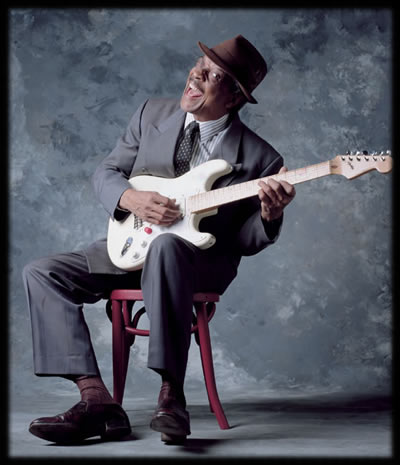 After Wolf's death, Hubert continued playing with the last incarnation of Wolf's band, headed by saxophonist Eddie Shaw, until 1980, when he began a winding solo career that included home bases through the years of Chicago, Austin, Milwaukee and New Jersey. After Wolf's death, Hubert continued playing with the last incarnation of Wolf's band, headed by saxophonist Eddie Shaw, until 1980, when he began a winding solo career that included home bases through the years of Chicago, Austin, Milwaukee and New Jersey.
Hubert recorded for several labels, including APO Records, for which he made I Know You in 1997. He also performed as part of the second Blues Masters at the Crossroads concerts in 1999 at Blue Heaven Studios in Salina, Kansas, and again at Blue Heaven in 2004 as part of Kenny Wayne Shepherd's 10 Days Out... project.
Not an especially gifted singer and never having authored any of the hits to which he contributed so mightily, Hubert very much lived a "blues" life, never achieving considerable monetary wealth, if that were ever any goal of his.
But he was rich, as they say. And he leaves behind a legion of loyalists. He was the classic case of the one who won respect not by demanding it but by giving it. He came across as selfless and gentle, someone who smiled and laughed easily. Musicians, fans, music industry folks - so many who knew him or even just once met him had their version of describing him as a sweetheart.
Marc Sheforgen, APO Records
|
Howard Tate 1939-2011
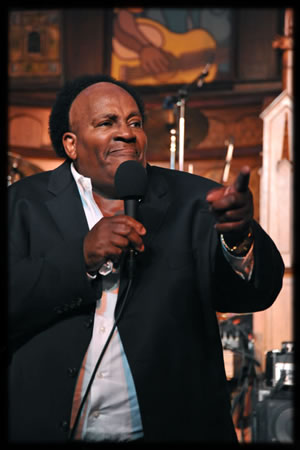
Singer Howard Tate, who performed at our 2009 Blues Masters at the Crossroads and recorded a direct-to-disc LP that same weekend, died Friday, December 2, 2011, reportedly from complications of Multiple Myeloma and Leukemia. He was 72.
Tate cracked the R&B Top 20 three times in the late 1960s, left music and endured hardship and anonymity for nearly 30 years and beginning in the early 2000s returned to his rightful place as one of America's most revered soul performers.
Tate performed his final full-length show at our Blue Heaven Studios in Salina, Kansas in 2009, and the direct-to-disc from that same weekend marks his final recording.
Tate was born in Macon, Georgia, in 1939 and moved with his family to Philadelphia as a young boy. In his teens, he joined a north Philadelphia gospel group, the Gainors, that also featured to-be star Garnet Mimms. The group recorded in the early 1960s for Mercury Records and Cameo Records before Tate left to become the featured singer of organist Bill Doggett's group.
In the mid-'60s, Mimms urged producer Jerry Ragovoy to check out Tate, and from 1966 to 1969 Tate and Ragovoy recorded about 10 singles, the first for the Utopia label, the rest for Verve. "Ain't Nobody Home" (1966), "Look At Granny Run Run" (1966) and "Stop" (1967), all written or co-written by Ragovoy, each charted R&B Top 20. But to rock audiences, Tate was best known as the original performer of "Get It While You Can," which became one of Janis Joplin's signature tunes. Tate's debut album, Get It While You Can, was released in 1966 to tremendous acclaim. Rolling Stone called the album "a spectacular showcase of suave, muscular good-powered singing, heavily influenced by Sam Cooke, with a joyous, shrieking falsetto that became Tate's trademark."
Tate recorded a few more singles for Lloyd Price's label, Turntable, before reuniting briefly with Ragovoy for sessions on Atlantic. After one more single on Epic in 1974, Tate all but vanished. Despite his success, he was unhappy with how the music business was treating him, never having seen any royalties.
Tate sold securities in the New Jersey and Philadelphia areas into the 1980s when he succumbed to substance abuse and endured a very tumultuous period of homelessness and personal loss. He turned his life around and began work as a minister and counselor in the early 1990s. Then in 2001, a musician Tate had toured with back in the 1960s ran into him in a supermarket and within hours Tate's old producer, Jerry Ragovoy, was calling, resulting in a return to the studio for the Grammy-nominated Rediscovered. He followed up with Howard Tate Live in 2006, A Portrait Of Howard - with guests Lou Reed, Carla Bley and Larry Goldings - in 2007 and Blue Day in 2008.
Music luminaries have recognized and celebrated Tate's trademark voice throughout the years, with Elvis Costello calling him "the missing link between Jackie Wilson and Al Green." Among the well-known musicians that have covered songs originally recorded by Tate are Joplin ("Get It While You Can"), Jimi Hendrix ("Stop"), Hugh Masekela ("Stop"), B.B. King ("Ain't Nobody Home"), Ry Cooder ("Look At Granny Run Run") and Grand Funk Railroad ("Look At Granny Run Run").
|
|
|
|
Unsubscribe Instructions
You have received this Email because you, or someone
acting on your behalf, subscribed you to the Acoustic Sounds Newsletter. You
can unsubscribe by clicking
here. Please do not reply to this address. All bounced Email addresses will
automatically be unsubscribed. To contact us click
here. Forward
this email to a friend. Did you receive this email from a friend? To receive
your own messages in the future, click
here.
Order Toll Free 1-800-716-3553
P.O. Box 1905 Salina, Kansas 67402-1905
|
|
|
|
|
 In-Stock Music Orders Over $99 SHIP FREE Within The Continental U.S.





 Login
Login
 My Account
 Cart
Cart Wishlist
 Contact