 In-Stock Music Orders Over $99 SHIP FREE Within The Continental U.S.



 Login
Login
 My Account
 Cart
Cart Wishlist
 Contact





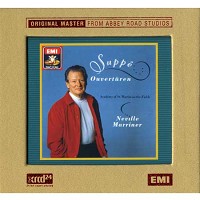
Marriner, Academy of St. Martin-in-the-Fields - Suppe: Overtures
|
| Label: |
EMI |
| Genre: |
Classical |
| Product No.: |
CEMI 501119
|
| Availability: |
Limited Stock
|
| Category: |
XRCD24 CD |


Despite his early ambitions to become a lawyer or a chemist, Francesco Ezechiele Ermenegildo Cavaliere Suppe-Demelli changed direction and joined Vienna's musical scene in 1840. As third conductor of the Theater in der Joesfstadt he was required to conduct and compose incidental music for popular farces and folk plays. The success of Offenbach's Orpheus in the Underworld made him determined to cash in on the latter's success with echt – Viennese works of his own. Decca was equally keen to capitalize on the advent of commercial digital recording in the early 1980s with a collection of Suppe Overtures. Four years later, in 1989, Sir Neville Marriner and the ASMF recorded a similar program for EMI.
| Leichte Kavallerie/Light Cavalry/Cavalerie legere | Tantalusqualen/The Torments of Tantalus/Les Supplices de Tantale (Julian Farrell clarinet/Klarinette/clarinette) | Die lrrfahrt um's Gluck/The Peregrination after Fortune/La recherche vagabonde du bonheur | Die Frau Meisterin/The Lady Mistress/Madame la Maitresse | Ein Morgen, ein Mittag und ein Abend in Wien/Morning, Noon and Night In Vienna/Matin, Midi, et Soir a Vienne(Stephen Orton Violoncello/violoncelle) | Pique-Dame/The Queen of Spades/La Dame de Pique (Die Kartenschlagerin/The Fortune Teller/La tireuse de cartes) | Wiener Jubel-Ouvertiire/Viennese Jubilee Overture/Ouverture viennoise de jubilee | Dichter und Bauer/Poet and Peasant/Poete et Paysan(Stephen Orton Violoncello/Violoncelle) |

|
View other items by Marriner, Academy of St. Martin-in-the-Fields |
|
 Send to a Friend
 Print this Page

|
|
|
||||||||||||||||||||||||||||||||||||


We Accept

© 2024 Acoustic Sounds, Inc. All rights reserved.
Prices and availability are subject to change without notice.
Read our Privacy Policy
Prices and availability are subject to change without notice.
Read our Privacy Policy